




Seminar Provides Guidance to Indian Farmers: Part I
 November 20, 2012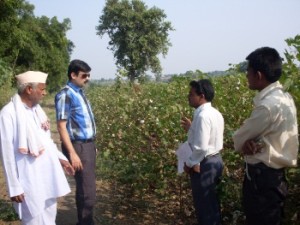
More than 50 Indian cotton growers attended a seminar held in the Washim district of Maharashtra, India, to learn best practices in cotton cultivation from Manish Daga, director of Lesha Impex Pvt. Ltd. Daga, locally known as “The Cotton Guru,” instructed the farmers on ways to cultivate more cotton plants per hectare, how to use drip irrigation, and ways to decrease the usage of pesticides.
The seminar covered the following areas:
- Agriculturist Sheetal Giri guided the farmers with audiovisual presentation about methods of picking, storage, precautions, and contamination prevention, all of which are critical to the quality control of seed cotton. They also watched a film that illustrated the price benefits achieved by farmers in Punjab after they followed good picking and storage practices.
- Market advisor Vaishali Kulkarni introduced Daga and announced the registration procedure for COTTON GURU Farmers’ Club. The Farmers’ Club was formed to unite farmers and give them a medium to ask questions and express their opinions, as well as to increase their purchasing power when Daga negotiates on their behalf with gins, mills and exporters.
- Daga highlighted the benefits of good cotton picking and storage practices on quality — and thus, ultimately, on the market price of seed cotton. The growers said that labour costs for cotton picking were high – and could get higher if the workers were asked to strictly follow the procedure of picking only seed cotton and not seed coat, branches and other impurities. Daga pointed out that if the growers formed a group, they could collectively negotiate picking rates and fix the schedule of each farm. He emphasized that seed cotton must be collected in cotton bags after picking because the presence of plastic, gutka pouches and synthetic material in seed cotton is like poison for ginners and mills.
- Daga also stressed that seed cotton must be tested in a registered laboratory for specifications such as staple length, fineness, strength and trash content, and how uncontaminated seed cotton can fetch growers a premium on the market.
- Farmers also asked about the minimum support price (MSP) of seed cotton. They felt it was low and not affordable, but Daga explained that cotton farmers were better off than those who grew other crops, such as soya beans. For most competing crops, the current market price was well below the MSP fixed by the government. In addition, irregular monsoon rains had more adverse effect on other crops than they did on cotton. Daga provided details on analyzing the production cost of cotton and explained the system of marketing of seed cotton depending upon the capacity of the farmer.
In the second installment of this series, Manish Daga explains to Indian growers why testing is so important to the market price they receive for their seed cotton. It will appear in the Nov. 29 edition of Cotton International eNews.


0
1
5
Seminar Provides Guidance to Indian Farmers: Part I
GET THE NEWSLETTER TODAY!

NEWS